Wednesday, 2 September 2026Today's briefing is live

The Standard Review

An independent daily journal of reporting, analysis and long-form essays — on the cities we build, the money that moves them, and the culture left behind.

Founded
2009
Readers
214k
Desks
06

The Lead · Cities

The quiet redesign of the city that never announced itself

Behind the headlines of record construction, a slower story is unfolding in planning offices from Rotterdam to Rio. Our reporters spent three weeks mapping what actually changed — and who paid for it.

By Elise Vane · 14 min read · Updated 6:42 this morning
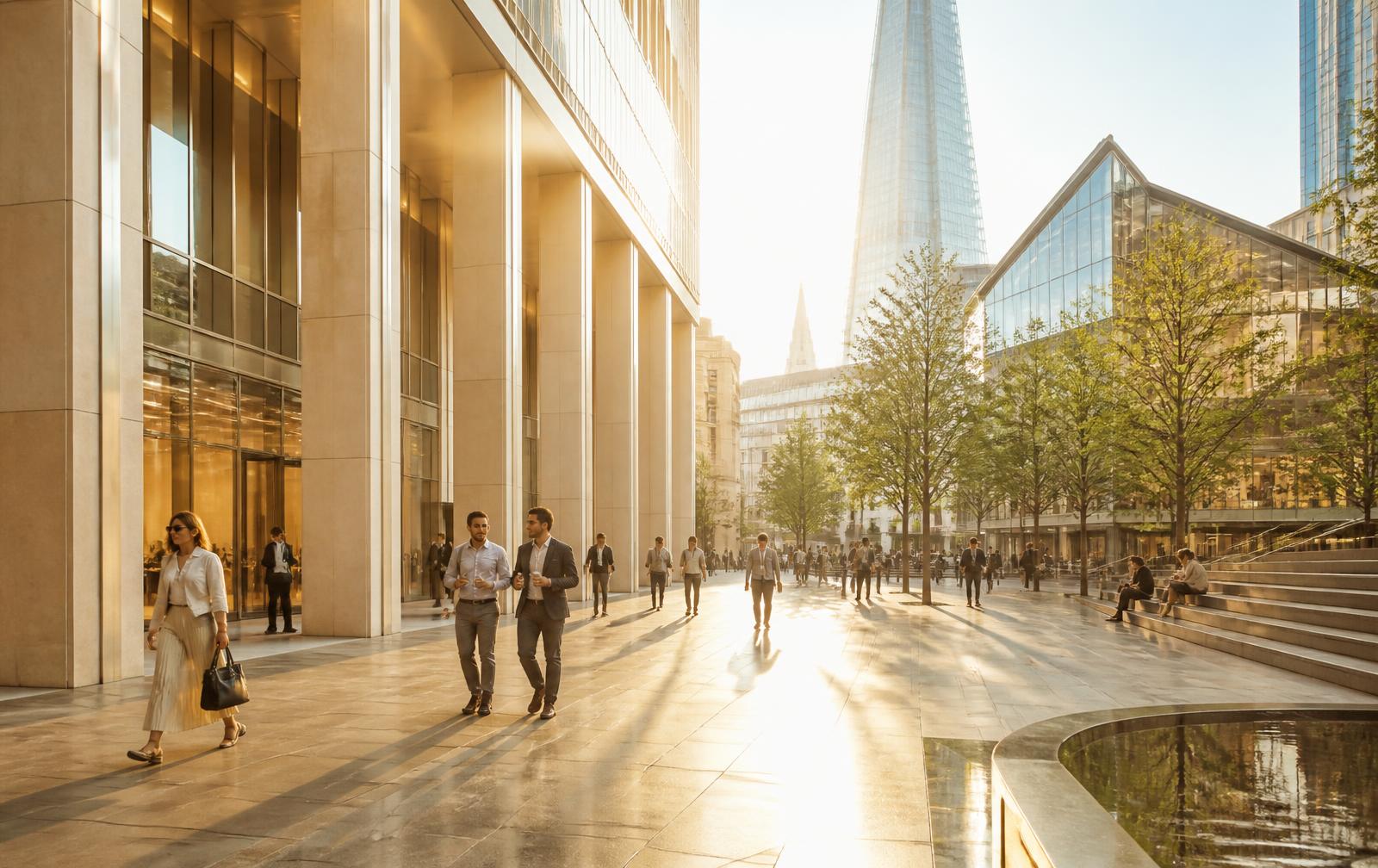
Morning light across a modern city plaza with commuters walking between glass and stone buildings

The first thing you notice is the absence of noise. Where a six-lane approach once ran, there is now a shallow water channel, a row of young limes, and a bench nobody has yet claimed. The change took eleven years, four administrations and one very stubborn borough surveyor who kept a ledger of every promise made to the street.

What that ledger records is not a masterplan. It is a sequence of small permissions — a widened pavement here, a delivery bay retired there — each individually unremarkable, collectively a rewriting of who the city is for. We asked the people who signed them whether they knew what they were building.
The Index

Everything filed in the last 48 hours, in order

  1. 01
    The twelve-minute city: what happens when transit finally arrives

    Three neighbourhoods, one new line, and a quiet redrawing of who gets to live where.

    Cities

    Anwen Clarke · 9 min · 1 hour ago

  2. 02
    Private credit is now bigger than the banks that fear it

    The lenders nobody regulates are writing the loans everybody depends on.

    Markets

    Priya Anand · 12 min · 4 hours ago

  3. 03
    The grid learned to think, and the engineers are still catching up

    Inside the control rooms where forecasting models now outrank human intuition.

    Technology

    Theo Marsh · 14 min · Yesterday

  4. 04
    Slow news is having a moment — and it is entirely deliberate

    Newsrooms are rewriting their clocks. The results are stranger than expected.

    Culture

    Nadia Kross · 7 min · Yesterday

  5. 05
    A short history of the corner shop, told through its receipts

    Forty years of paper slips reveal a street changing faster than its façades.

    Cities

    Sam Ivory · 6 min · Tuesday

Soft daylight falling across a curved white concrete staircase

The Long Read · 26 minutes

What a newspaper owes its readers when the world refuses to wait

A case study in speed without compromise: how a mid-size paper rebuilt its entire desk around depth, halved its output, and doubled the number of people who finished a story.

The reorganisation began with an uncomfortable audit. Of the eleven thousand articles published in a single year, fewer than four hundred were read to the end by more than a thousand people. The rest were, in the words of one editor, "traffic we rented from a search engine." What follows is the story of what they built instead.

Begin reading

From the columns

A newspaper's first duty is to be readable. Everything else — the scoop, the scale, the speed — is downstream of a reader who stayed.
Elise Vane · Editor-in-chief
We keep describing the economy as weather. It is not weather. It is a set of decisions, taken by people with names.
Marcus Hale · Economics desk

Standards & Trust

How we work, written down and kept to

Trust is not a slogan on a page like this one — it is a set of rules a newsroom agrees to be embarrassed by when it breaks them. These are ours, in full.

Folded printed newspapers and a ceramic cup on a light oak desk in morning daylight

01

Reported, not aggregated

Every story on this page began with someone standing somewhere, asking a question out loud. We do not rewrite wire copy and call it journalism.

02

Named sources by default

Anonymity is granted rarely and explained plainly when it is. If we cannot tell you where something came from, we tell you that too.

03

Corrections in daylight

Errors are published in the same place and at the same size as the original claim. Our correction log is open and permanently archived.

04

Funded by readers

No sponsored features, no advertorial, no paid placement inside editorial. Subscriptions cover the desk, the travel, and the time.

The Morning Review

Six stories and one long read, before your first coffee

Sent at seven, every weekday. No push alerts, no breaking-news theatre, nothing you will need to unlearn by lunchtime.

Free forever. One click to leave. Read by 214,000 people.